Wastewater Treatment Plant
-
Active service
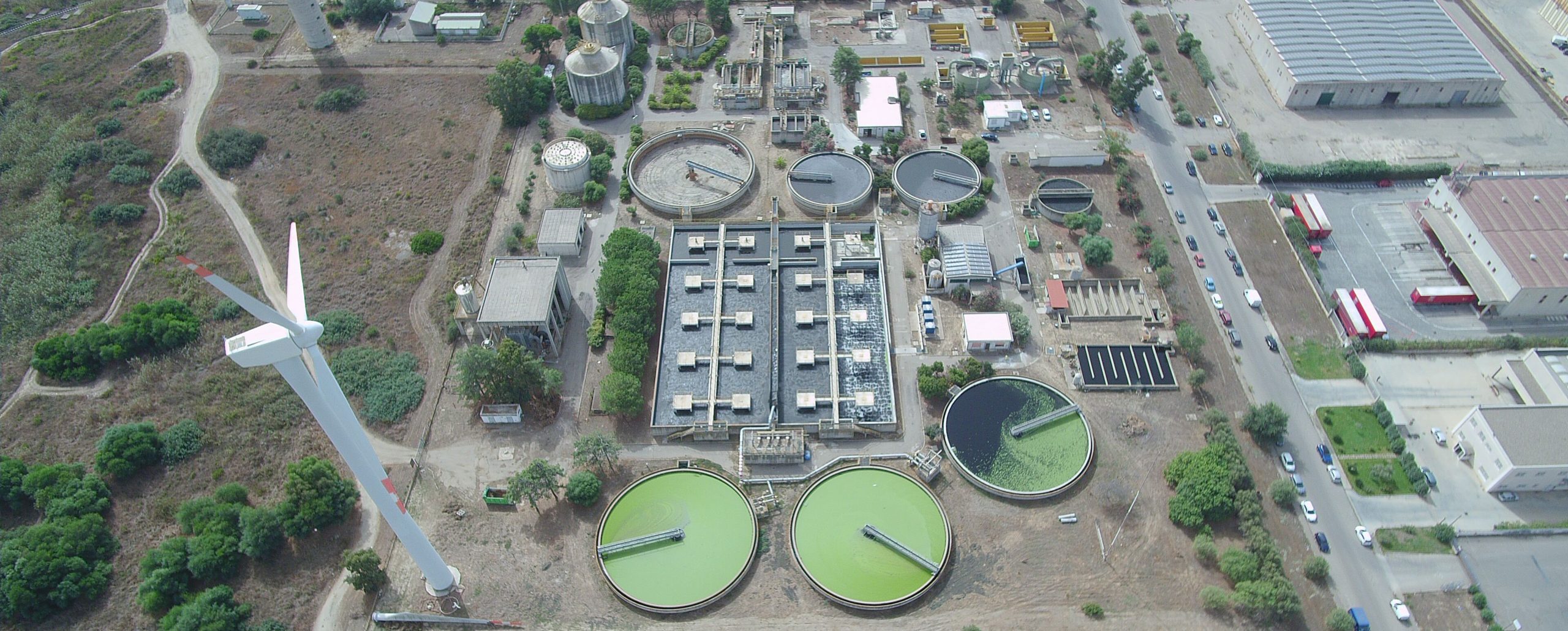
A strategic infrastructure for the local area and its businesses.
In the central area of the Oristano Industrial Agglomeration, on a site of more than 4 hectares, stands the largest wastewater treatment plant in the Province of Oristano, designed and operated directly by the Oristano Provincial Industrial Consortium (CIPOR).
Progettato negli anni ’80 per servire inizialmente il capoluogo oristanese e gli insediamenti produttivi del polo industriale, l’impianto ha visto una significativa espansione tra la fine degli anni ’90 e i primi anni 2000, con l’aggiunta di una rete di collettori e numerosi impianti di sollevamento, al fine di estendere il servizio a un’ampia porzione del territorio provinciale.
A wastewater treatment service serving the wider territory.
Oggi l’impianto consortile tratta le acque reflue civili e industriali provenienti dai Comuni di:
Oristano, Cabras, Santa Giusta, Palmas Arborea, Solanas, Riola Sardo, Nurachi, Baratili San Pietro, Zeddiani, Simaxis, Solarussa, Siamaggiore, Pardu Nou, Ollastra, Zerfaliu, in addition to the discharges from the industrial agglomeration.
The plant also provides treatment services for liquid waste delivered by tanker trucks and tankers. These industrial and urban liquid wastes originate from across the entire regional territory.
La gestione dell’impianto è in house, con personale del Consorzio.
How the plant operates
The plant receives wastewater through:
- Three pressurized pipelines (from the Northern Sector of the Agglomeration and from the served municipalities).
- One gravity pipeline (from the Central Sector).
È strutturato su due linee di trattamento, dedicate alla depurazione di acque nere e acque miste, e si articola in tre fasi principali:
Preliminary treatment (physical processes)
- Screening: removal of coarse materials.
- Grit and oil removal: elimination of sand and oils.
- Primary sedimentation: separation of finer solids and sludge.
2. Biological and chemical treatments
- Biological oxidation with activated sludge: removal of carbonaceous and nitrogenous compounds.
- Secondary sedimentation: separation of biological sludge.
- Final chlorination: disinfection prior to discharge.
3. Sludge treatment
The produced biological sludge is:
- Thickened
- Mechanically dewatered using a belt press.
4. Liquid waste treatment
The liquid waste treatment service operated within the wastewater treatment plant provides for:
- vehicle reception and weighing;
- pre-treatment using a screw screen;
- storage and homogenization in two tanks of approximately 50 m³ each;
- pumping to the headworks of the wastewater treatment plant.
The plant is currently authorized to receive the following EER waste codes:
02: 02 01 01, 02 01 06, 02 02 01, 02 02 03, 02 02 04, 02 03 01, 02 03 04, 02 05 01, 02 05 02, 02 06 01,
02 06 03, 02 07 01, 02 07 04, 02 07 05,
04: 04 01 05, 04 02 17,
07: 07 06 12,
08: 08 01 20, 08 03 08,
12: 12 01 15,
16: 16 10 02,
19: 19 07 03, 19 08 05, 19 08 09, 19 08 12, 19 08 14, 19 09 02,
20: 20 01 08, 20 03 03, 20 03 04, 20 03 06.
A key infrastructure for environmental protection and development.
The CIPOR wastewater treatment plant is a virtuous example of integration between industrial infrastructure and environmental management, benefiting both the companies located in the area and the local communities.
Its central position within the regional territorial context makes it a strategic reference point for activities and businesses operating even beyond the provincial boundaries.
It represents an essential service for the sustainable competitiveness of the Oristano industrial area.